Showing posts with label Youth. Show all posts

Monday, 3 December 2018

Mother’s illness led this man to organic, climate smart agriculture


When Ravdeep’s mother first heard that her son is going to take up farming, she was deeply disappointed. Standing in his farm in Punjab’s Pharwahi village in Barnala, Ravdeep remembers with a smile: “She said all the resources and efforts she had put into my education had been in vain.” But she also knew and took pride in the fact that her son could successfully meet the most difficult challenges. Ravdeep proved it was true when farming became his means of livelihood.


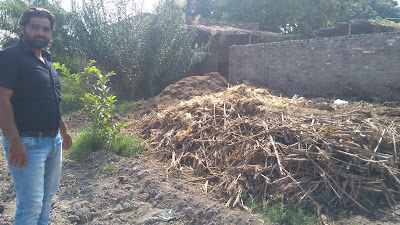
Ravdeep on his farm

Actually, it was because of his mother that Ravdeep had felt an urgent need to grow food organically. When his mother got cancer in 2009, Ravdeep started spending a lot of time at the hospital. The number of people he saw that had got diagnosed with the disease, and the fact that children were also patients, shook him up. He started questioning his entire way of living. “I always knew that chemicals are not good for us but my mother’s illness made me realise that we are poisoning everything . . . our air, water, food.”

Then a friend gave him agriculturist Subhash Palekar’s book on natural farming. Ravdeep also got in touch with Kheti Virasat Mission (KVM), a non-profit working for farmers’ rights and food security that regularly conducts organic farming trainings.

The paddy problem

Ravdeep finally started farming through organic methods in the year 2012. “I first stopped growing paddy. In organic agriculture, it takes longer to harvest. The crop also has to be completely dry or the mandi, the market, does not accept it. By the time this happens, the sowing of the wheat gets delayed. I was also unhappy when I noticed the eventual hardening of the soil due to puddling [when the land is tilled while flooded to make the soil soft for rice plantation].”

Punjab ranks third in rice production in the country with 2.97 million hectares of the land under rice cultivation. 2.5 percent of human induced climate change in the world is estimated to have been contributed by flooded paddy fields.

Ravdeep says, “Earlier at least we used to retain trees around our farms. Now with the overabundance of paddy and the use of tractors and combines, there is no place for trees.” Not only environment but human health has been affected by the overzealous production of paddy. Ravdeep, along with his family, is conscious of his food choices: “Traditionally we grew and ate a variety of crops. Now it’s either rice or wheat and then we struggle with gluten allergy.”

He also blames paddy growing for being the original cause of stubble burning in Punjab, leading to polluting and warming of the atmosphere: “In fact the Punjab Agricultural University, based in Ludhiana, which is now advising farmers against burning, is the one that started doing it years ago.” Farmers say they cannot use machines or labour to remove the stubble because of the expenditure involved. But Ravdeep has a different take. He feels the cost one pays for illnesses like asthma or when injured in an accident caused due to decreased visibility because of smoke is much higher. Farmers need to see economics in its full picture, he insists, and not just have a short term vision.

However, he admits that a good number of farmers cannot afford happy seeders or tractors or other big machines. Some villages have a few of these machines that are to be shared by the community through cooperatives but it is often not practical. Ravdeep explains, “One seeder covers one acre of land per day. Farmers have ten days and 3000 acres to sow. So they need twenty seeders at the same time in the sowing season and cannot afford to take turns individually.”

After all these issues, Punjab has had to face rejection of export consignments because of pesticide residue in the rice. “The farmers who grow this rice do not eat it themselves. It is bought by the Food Corporation of India for distribution. People in south India like their own varieties. So why are we still growing it,” laments Ravdeep.

Beauty, and balance, in diversity

Following farmer-philosopher Masanobu Fukuoka’s book The One-Straw Revolution, on Ravdeep's six-acre farm, he is growing multiple crops, vegetables and fruit and flowering trees. They are not water intensive, and growing them organically has brought back the birds and insects that are killed or driven away by chemicals. In awe of this rich biodiversity through which his farm is making itself climate resilient, Ravdeep confesses that before this he had seen this feature only in the fields of his predecessors. Stubble is “food” for his crops and so he even collects the straw from his neighbours’ fields, which the farmers are only too happy about.


Long lost insects and birds have returned to Ravdeep's farm

The market

Ravdeep, like many other organic farmers, end up selling some of his produce in the common market. Wheat and pulses get the rates deserving of organic produce. He says 5-10 percent of the customers are ready to buy organic food at the correct price, though all agree that chemicals are bad. But in this small percentage there is a mix of “rich, lower middle and middle classes”, explains Ravdeep, depending on how serious they are about their family’s health or whether there has been an illness in the family.

KVM, which Ravdeep is connected with, has a shop in the area but it is open only once a week. Private buyers who get to know of organic farmers also buy from them directly. But Ravdeep says he could not have pulled it off without his family’s support. His wife, who is a teacher, and his daughter help with processing some of the produce at home before it can go to customers. “If I had to go out for processing, the cost and logistics of it would not have worked out.” Therefore Ravdeep recognises that a farmer cannot make a sudden shift to organic farming, and underlines the need for government to incentivise organic agriculture, and to provide markets for those who are already doing it.


First published in Beyond Headlines, 30 Nov.


Friday, 9 November 2018

How theatre in Delhi has been finding and creating stages beyond Mandi House


A theatre is not a blank page for editorial, it is not a soapbox or a Tannoy system: it is a conscience that wakes with what is happening in the space, and wakes further still in response to what people are making of it.

-Andrew O'Hagan

When I joined the Hindi dramatic society of my college in Delhi University in 2003, it was the mention of the National School of Drama (NSD) that used to get us all starry eyed. To give us a flavour of the city's theatre, our seniors took us to Mandi House for a show of Premchand's Rangbhoomi. We sat enraptured as we watched professional actors play out the subtleties and complexities of each character, and of a bygone era. It still remains one of the most memorable performances I have witnessed.

Therefore it was only natural that when those interested in theatre walked out of their colleges, NSD was one of their top priorities. Of course with few seats and state-wise allocations, not everyone could join. Some people trained at other places in and outside India and brought to Delhi their experiences of physical theatre, theatre with dance, theatre as therapy, theatre with communities, children, theatre as clowns . . . As these specialisations developed, the theatre circuit in Mandi House expanded to make way for a larger, more organically shaping theatre scene in different parts of the city.

In Shadipur, Studio Safdar has a small rehearsal-performance space and also a book cafe, which hosts readings, talks, music sessions. Groups have been hosting intense performances in small cafes. There are "alternate theatre" groups like Third Space Collective that have been successfully staging their shows on bigger stages like Epicentre, Gurgaon. The group I was associated with, Aatish, and the project I was part of, Genderventions (by The Pocket Company, directed by Niranjani Iyer), transform atypical spaces like parks, gullies and bus stands for interactive theatre on ongoing social issues. And then there is solo theatre by people like Maya Rao and Mallika Taneja deeply invested in issues like gender justice, power packed deliveries that have broken the myth of such performances being navel-gazing exercises involving dull monologues. Mohalla Festivals organised by the Lost & Found Trust hosted performances in residential colonies, supported by the resident welfare associations and the inhabitants of the locality. Trees people jogged beneath in parks were used to prop halogens.

Almost all these groups are travelling troupes, performing outside Delhi and, at times, outside India too. Apart from NSD, there are theatre courses in Sri Ram Centre and in newly emerging institutions like Shiv Nadar University and Ambedkar University. Courses are being designed keeping in mind people in other professions so that they do not have to thwart their love for theatre because of being in full time jobs. At the same time, schools have opened up to teaching theatre and theatre practitioners are being appointed by them. Theatre Professionals, Mumbai, is a group that has been identifying such artists in Delhi and placing them with schools here. Kingdom of Dreams in Gurgaon is seen as many as an elitist, commercialised theatre space while other actors feel the pay they get there allows them to do other, more "soulful" theatre. Slam Out Loud, an arts group I worked with, is pushing the envelope further and taking theatre to children in government schools.

This varied mix of theatre groups, spaces and methods has been a welcome development in Delhi where theatre enthusiasts do not have to settle for a narrow definition of theatre but can choose to get involved in the kind of theatre that relates best to their individual interest and ideology.


First published in DailyO, 10 Nov 2018.


Sunday, 17 June 2018

My humble attempt to “take back the night”


After having lived at the same place in New Delhi in India for over a decade, I was happy when I moved to a part of the city where my college friend was my neighbour. If I drive to her place, it doesn’t take over five minutes. One night, I was leaving her house around 12, grinning from ear to ear after hours of laughing at her slapstick jokes. My car had just about touched the gravel of the road when a bike dashed past me, the driver hatefully spitting out these words: “You are roaming the streets at midnight?!”

I am always over-conscious about following the rules while driving because women drivers are summarily ridiculed while men always beat them when it comes to rash driving statistics and the overconfidence that it takes to leave a car parked in the middle of the road, or the sense of entitlement needed to graze your car and stare at you blankly when you look to them for an apology. This time too my first instinct was to check if I had been in the wrong. But I couldn’t figure out what had inspired him to curse when both of us had enough space to co-exist on a broad two-lane, and my speed wouldn’t have made a cycle rickshaw insecure. There was hardly any traffic.

The sad and simple explanation was this: Years after the rape and murder of the student on 16 December 2012, whom the country had decided to call Nirbhaya, the city felt just as repelled by the idea of a woman on a night street.

In college too cowardly bike riders were a common pestilence, even as early as seven in the evening, uttering inane jibes and scurrying away cockily. It was not acceptable to us to remain helpless so we took to walking with stones clenched in our fists. Hearing an occasional pebble hit the spokes of their wheels made us feel we had been able to answer back.

This time I was in a car, supposed to be safer for women compared to public transport or walking. My hands were empty, and I threw them up in the air to ask the bike driver what he meant by his rudeness. I don’t know if the motorist saw me. Once again, I tried to gulp down the feeling of having been attacked and not having been able to retaliate.

People often enquire, “Don’t you feel scared, going around everywhere alone?” When one has to feel scared without having done anything wrong, the fear eventually bursts giving way to the molten lava of anger. The sense of injustice that jabs at the heart every day becomes sharper than fear. It becomes a question of living with dignity, with your head held high, rather than surviving each day curled indoors and inwards like a foetus.

The one riding the bike that night was merely a face I could not even see clearly. But his arms and shoulders, giving strength to him, were huge sections of society. The rebellion against all of them churning in my stomach made me resolve that now I would actually roam and not rush back home fearful.

I started driving at a leisurely pace. There were other people, rather, other men on the roads . . . strolling, chatting, buying ice-cream without looking over their shoulder, while it is a fantasy for women to enjoy such nightly strolls on the streets. I wanted to be able to pass them peacefully without another fight, another encounter. I wanted to own the streets as rightfully and confidently, as do those who think of mothers while cursing and of fathers when asserting their right over the street. Nobody asks, “Does the road belong to your mother?” It’s always the father when it comes to property ownership. What falls in the mother’s share is the home, and only till they promise to remain the sacred tulsi plant in the courtyard, quiet and uncomplaining.

Having arrived at my place, hardly a kilometre away from my friend’s, I calmed myself down as I unlocked my door and thought of how the bleak situation seems the same even after all the uproar over the assault on Nirbhaya. But what kept coming back to me was the outrage and insecurity in the mototrcyclist’s voice, which showed he was not able to digest a woman a) being out b) at night c) driving a car.

Those who have been raised to believe that being a man is to be everything a woman is not would have difficulty swallowing when they see women in “manly” roles. But this change would not seek the permission of such men. Nor would it quietly wait for the police or the administration to get their act together. It is true that women like Nirbhaya have been going through brutalities in villages and cities. But voices suppressed for ages are also revolting. The torment that had to be quietly borne but could not be named is now being spoken of in debates, discussions, protests, FIRs and courts.

Women have battled oppression for years. We are perhaps too cynical now to dream of a magical revolution overnight. To live a life of self-respect, however, we cannot afford to be resigned either. It’s hard to say about the country but its women are changing. The roots of this change sprouting within us are claiming the streets, and the land beneath.


First published in thREAD, The Hindu, 18 May 2018.


Friday, 8 June 2018

Seeds of an ancient culture


They live close to the last forests, for they still keep the secrets of nature. Perhaps unknown to them for centuries, the forestland and mountain ranges they inhabit contain the richest mineral reserves in the country. Now that India is growing as an economy, development has turned its glare on tribal country. The region that has come under the sharpest focus of the growth-rate-driven new economy is the tribal heartland of Chhattisgarh. This is a state that abounds in minerals, which in turn have brought the horde of mining companies to devour the wealth lying hidden inside the hills. Ruthless mining has left the surroundings badly scarred and the people devastated. Since the administration invariably sides with the big companies both from the private and government sectors, and the mainstream political parties are reluctant to cross swords with the corporates, the resistance has come from the far-left guerrillas. The tribals have often been caught in the crossfire between the armed forces on one hand and the plucky, at times ruthless, guerrillas on the other. Their identity has been reduced to that of victims. But beyond it all lies their everyday life and ancestral practices, informed by science and wisdom that comes from living in close proximity to nature. They hold the key to many layers of a past otherwise lost to us. This way of life too has now come under attack from a slash-and-burn consumerist culture and the bludgeoning impact of ‘civilization’, which threatens to steamroll all individuals and social groups into a homogeneous, conformist mass, a community to be benchmarked by primetime television. To see what survives and find out about the traditions that are still extant, I visit a few villages in the districts of Kanker and Balod and meet members of the Gond tribe.

Religion

Palash flowers, or flame of the forest, whizz past our lines of vision as our motorcycles make their way from Kanker town to Khamdongdi village. Reluctant to annoy my guides as the awestruck city dweller who wants to photograph everything, I make a special request to stop at the lotus pond framed by the mountains on one side, and the blossoming plants and trees on the other. Natural beauty in the region is the rule, not the exception, so I get ready to record with my mind and eyes what I cannot click.

Entrance to a village

My guides are members of KBKS, Koya Bhoomkal Kranti Sena, a youth group that stands up for the right of the indigenous people and tries to understand and preserve their own culture. One of them, Yogesh Nareti, says to me, ‘At times we are not allowed to enter these jungles that you see. What has always been ours is now being claimed by the state. But so much of our life does not fit into the existing diktats and forms. We have no religion, we worship nature; yet we are being clubbed with Hindus. We don’t believe in untouchability but sometimes we are treated as untouchables. Our people are being exploited because they do not have formal education and those who get educated are buying into the majoritarian myths.’

I notice in the forest some gravestones, painted and elevated to mark the dead, a trend, I am told, that has been prevalent for the past three decades or so. Before this, huge stones used to be erected, many can still be seen about, at the burial sites, tilted in the direction of the sun to mark the time. Under some trees, I see wooden figurines suggesting it was a place of worship. But Adivasi culture has not been about idolatry, I am told. A greater, purer being is said to find refuge in trees, birds and animals, different in different communities. Each community has a few specific trees, birds, and small and big animals that they have to protect and cannot kill. This way each social group ends up protecting some flora and fauna.

The deceased are considered to have got transformed into gods who now act as the guiding lights for their descendants. Thus, the farewell, not seen as final, is celebrated. When the family members and neighbours take their dead for burial, they tell everyone around that so-and-so has ‘become a god’, not that he is dead. ‘Unmarried people are not buried with the older, married ones,’ Yogesh laughs. ‘Because we the young ones can be useless and foolish, not to be cremated with the purer, wiser ones.’ Then he shakes his head, more serious this time. ‘They used to call the burial place the gudi, the living place of our pen, the ancestral god each community has. Now they have picked up the current day parlance and call it marghat, the place of the dead. Of course when the young die it is not the same thing as the passing of an elderly person, leaving the world at the ripe age.’

With modernity pushing its way into tribal life and the pressure mounting for retaining their unique identities and getting recognized as such, some people have started adopting visible markers for their tribe. In one house, I notice a framed emblem on the wall denoting the seven seasons through that many colour stripes. The ancestors, also symbolised in some of these flags, are commemorated with gratitude because they brought up their children in harsh, at times hostile natural conditions.

The pen gudi, or the place of worship, is usually in marh, or forested areas. Since God is supposed to preserve nature – the realm they therefore inhabit – nobody is allowed to cut trees in this sacred territory. The Rowghat mines, part of the government’s development agenda in the Bastar region, became a site of contention for this reason too; it is at the heart of this pen worshipping circle. The fabled festival of lingo karsad or jatra is held here every year. Participants come from Orissa, Maharashtra and some other parts of the country. Interestingly, aboriginals from the other end of the world – as far away as the Pacific – arrive to be part of the celebrations. ‘People who come to pay their respects from other places,’ Yogesh says, ‘including the indigenous tribes of Australia and New Zealand, ask us if their wishes would be granted by the gods. We tell them they would come true for sure, but they should not be against nature or harm it in any way.’

Raj Mandavi, another KBKS member, is upset about the mines too. ‘Our puja cannot be done inside closed doors; we don’t have buildings for our gods. But when we tell the government to protect our religious areas, they say they don’t see any temples around.’ Now some educated Adivasis have started mocking the old customs, and call the followers regressive. Raj is dismissive of them: ‘They have started doing havan, imitating the Brahminical rituals.’

I meet Mane Singh Kavde, a herbal doctor, in Bewarti village in another part of Kanker; he draws another comparison to explain the tribes’ way with God, a highly refined form of animism that the poet Wordsworth would have appreciated. ‘If you look at how we follow the cycles of the moon, bury our dead, and so on, you would find that these ways match with the people who practise Islam.’

In the village of Vishrampuri, the youth leaders say that to them others’ caste or religion has not mattered because at the end of the day everyone around is communicating with each other using the same Gondi language.

‘We have been taught that our history begins from the time there came to be stones and rivers on this earth,’ Yogesh shares. ‘We come from water. No god has birthed us.’ He is upset that the tribes are being slotted as Hindu, and he talks of how in the official forms they are made to check the ‘Hindu’ box.

Some tribals are also borrowing from religion. On the wall of a village home in Khamdongdi is painted the ‘Om’ sign, and on the other there is a symbol marking the ancestral tribal deity Boodha Dev. A few days later, travelling in the town of Dalli-Rajhara in Balod district, in the car I listen to a song in praise of the tribal god Bada Dev. The track is a remake of the popular Hindi bhajan Om Jai Jagdish Hare. My guides are visibly embarrassed. ‘Aarti is not even a part of our customs.’

To explain this, Yogesh says, ‘See, Brahmins would come to our villages and read from the Ramayana. Feudal overlords like the old zamindars had brought them in. If a person opens a big heavy book and his audience cannot follow it, he then would be called the learned man. Now some people have a problem that we don’t burn Ravana’s effigy during Dussehra; they think we don’t because we are his descendants. I mean we don’t even know who this guy is, he means nothing to us. Why should we go about setting him on fire? Our culture is scientific. But in today’s time a doctor worships a god with four hands and calls a child born with an extra limb an aberration.’

Seasons, festivals, language

For the tribes, who have preferred the forests and mountains to multilane roads and swank flyovers to be true to their way of life, a change of seasons signifies a lot more than an extended Bombay Stock Exchange bull run or the crash of the blue chips. A good monsoon or the spring blossoms would impact their life in a more basic way than events that qualify for primetime breaking news.

‘Each season is so important, we actually don’t have a first,’ concludes a KBKS member after a discussion among themselves. Seven seasons, or pandum, which means to create a system, are counted following the lunar calendar: beeja (celebrating the seed); kusir (before which one is not to have leafy vegetables; garab (the paddy is pregnant and people are wishing for a good crop); punang tindana (celebrating the new harvest); charu (till this time harvesting a crop is not allowed, and certainly not chopping trees) and the second charu (the time for storing and winnowing); hessa (offering to the pen what people would be consuming in summer – having the same in winter can make one sick); and marka pandum. The marka pandum or the mango festival signifies the ripening of the fruit, when the seed is fully formed, and the fruit can be eaten. The mango tree is supposed to put up a fight to save its children – its fruit – and therefore, it is said, eating unripe mangoes causes mouth sores. It is not surprising therefore that a traditional rela song cautions against eating the fruit in a hurry even when the time is right.

The tonda sanskar festivities mark a new birth. The tonda, or the umbilical cord of the infant, is placed in a utensil, covered and buried to preserve it and keep it safe from misuse. The namkaran or christening ceremony involves showing a diya to the child, wishing that they are always able to see. KBKS says that the elders of their communities actually retain their sight and hearing until they reach very old age; even after their eyesight weakens, their ears remain sharp.

At the time of death, there is the kunda sanskar. ‘The rites are to store the energy of those who have passed into another state,’ explains a KBKS activist, ‘through this energy, through the DNA, our ancestors will guide us.’

The most important maternal deity is tanurmutte yaya, or the first mother hen, who is believed to protect her community just as a hen keeps her brood safe by hiding them under her feathers. During the festival of dewari, which KBKS members insist must not be confused with Diwali, food is laid out in a bamboo soop, a flat-hand winnower, and the family members as well as their pets eat from it together. The activists proudly claim that hardly any ‘civilized’ community would have such respect for animals.

Talking of civilization and language, Prahlad Netam of KBKS, who has been quiet so far, says, ‘Try saying aloud ‘ya’, our term for mother. Now say ma. You will find that ‘ya’ takes much less energy, and therefore when a newborn cries it seems to be saying ‘yaya’. The Gondi language has evolved in a way that speaking takes the minimum energy. So our ancestors could live long without much eating.’ He chuckles, ‘Now we speak too much and keep getting hungry.’

When I reach Dalli-Rajhara, a small town in Balod, I am surprised to see not many people speak Gondi. In the family I visit, the elderly woman and her son converse in Hindi. But they have proudly displayed some of their tribal markers, like the calendar in Gondi script placed next to the English one and the anti-clockwise clock that moves in tune with Earth’s motion, which the tribe worships along with the moon and the sun, and other elements of nature.

Food and drinks

Having remained cut off from urbanity and development for so long, the tribal way of life has been built around the concepts of self-sustenance and barter. Food, building material, natural medicines – everything comes under it. Even today, communities located deeper into the forests like Abujmarh are largely self-reliant. The proximity to the forests gives them access to the bounties of nature. In March, when I was there, it was the season for mahua. The small flowers from the trees are used to make a drink popular among the tribal people. Romanticized by pop music and films, mahua is inseparable from any celebration in tribal country. Actually the mahua flower has many medicinal properties that make it a favourite with the herbal doctors. It is perhaps a measure of mahua’s importance in tribal culture that it is offered to the gods. The many associations of mahua are indeed mindboggling – from the toast of loud music blared across Jharkhand and Chhattisgarh, to the herbal doctor’s prescription for many ailments, to an oblation to the gods. At several places we were served it as a welcome drink.

While going for an interview, we find a mahua tree on the way. Our driver stops and steps out with my other guides to pick the mahua flowers lying on the ground. A piece of cloth is spread out on the ground, and everyone starts putting their handfuls into it. Participating in the collective act of flower picking, I notice that while the tree is laden with the blossom, nobody thinks of touching any of it, as one is only supposed to pick what the tree has dropped on its own.

Mahua flowers being dried in the sun

Similarly, for salfi, another popular brew preferred over mahua in summer, a particular person is chosen from the community for the job of climbing up the tree to collect the juice. My guide, a young man in his twenties, talks of the beliefs that in a way maintain the order in tribal society. ‘If any of us randomly goes up and tries to get it, the juice will dry up.’ According to customs, girls are to plant the saplings, and when the drink is received from the tree the very first time, it is distributed for free to everyone around. An offering has to be made to the deity of the community the tree belongs to.

Marriage

When we are invited into the house of a KBKS member, Yogesh excitedly goes inside and comes back with a soop. ‘If a young man wields this soop assertively, moving it in a way that it brings a strong gust of wind, the parents come to know he is now fit to marry. If a woman can firmly hold it on both sides and winnow, she, too, everyone around would know, has reached the marriageable age.’ This is an unencumbered way for the young people to let their parents know they have arrived. If they like someone they can make it clear to their parents, and the young man’s family will then meet the girl’s. In case there are only daughters in the house, the family goes to the boy’s family to make him their lamhaade, a son-in-law who would stay at their place taking care of the girl’s parents like his own.’

The young men talking to me contest the simplistic urban narratives, the ‘sensationalist’ media write-ups describing some festive Adivasi gatherings as the rendezvous for young men and women to hook up for the purpose of sex. KBKS sees this mindset as an attempt to belittle tribal culture. Marriages within the same gotra or clan is not allowed, (the pair must be sam-visham, or belonging to opposite gotras). But a marriage between distant cousins is not considered wrong. ‘So if you see me flirting with a woman at a rela, our community song-and-dance ritual, it is because I have known her since childhood. Both men and women sing to tease each other. We can do this only because our elders are around, and we have their sanction. If we come across the same person elsewhere, say going somewhere, our behaviour would be entirely different. We would be most respectful and see if they needed any help from us, if they had had their lunch and so on.’

More importantly, in tribal culture, women enjoy an equal status and remarkable freedom. In the days I spent there, I did not hear of dowry harassment or obsession with the male child. Tameshwar Sinha, a local journalist, explains that here a girl is valued, not considered a burden, as she is seen connecting her parents’ family to her husband’s, acting as a bridge. Among the states, Chhattisgarh significantly has the highest female-male ratio. ‘My father keeps telling me,’ Tameshwar laughs, ‘we were waiting for a girl. How come you ended up in our family?’

And what if there's a marriage across the caste or clan injunctions? Yogesh says, ‘The rules are clear. Such a couple cannot participate in some of our most important community rituals. They will not be pressured to break up; and there is certainly no censuring them, “honour killings” do not happen here. The young people also abide by these rules and know that in these rituals they can still sit at the back, and if they have a boy, he, again, will be allowed to take part.’ But the tough part is if such a couple gives birth to daughters. Their marriage then becomes difficult. People would see this same gotra marriage as a flaw in the family line.

KBKS members resent the TV-induced urban culture seeping into village life spoiling the tribal simplicity: people now celebrate weddings under colourful marquees. ‘Earlier we would just chop some wood to erect a temporary structure and keep lending it to any family that had a wedding coming up; that way costs would be minimum.’ Relatives who came for the marming or manda sanskar, the wedding, would stay for three days. It was a time for the family to forge deeper bonds. Now everything is governed by expenses, and guests come and go even the same day. Also, while people were previously happy with silver jewellery, now, under the spell of heady consumerism, they are gold-struck. Keen to protect the tribal identity and distinct way of life, the young KBKS members are troubled by the infusion of such undesirable influences.

There is of course the ashirvad sabha, where people come to bless the couple with presents; this is called tikawan. To make sure that the host is not burdened, guests bring and contribute rice to the community kitchen. When people visit their married daughters, they follow the same practice.

xxx

Some researchers have been keen enough to understand the tribal culture by making themselves a part of it for some time and treading the complex terrain of being an observer-participant. Not very far from where I am – meeting the tribal activists and ordinary villagers nearly a hundred years ago – self-taught anthropologist-ethnologist Verrier Elwin did his seminal work among the Gonds. Much later his Tribal World of Verrier Elwin won him much acclaim and recognition. Still the loneliness of the forest people has not ended. They are either part of the tourism literature as part of the Indian exotica playing up to the cameras of the curious tourists or othered by the country’s political system. Their choices are limited: either getting exploited by a corrupt system or fetishized by the media and cultural commentators.

First published in The Equator Line, Apr-Jun, 2018.


Saturday, 16 December 2017

16 दिसंबर के बाद

दिल्ली में कई साल एक जगह रहने के बाद नए मोहल्ले में मैं खुश थी कि कॉलेज की दोस्त पड़ोसी बन गई। गाड़ी से उसके घर जाने पर मुश्किल से पाँच मिनट लगते थे। पिछले साल एक रात उसके यहाँ खाना और खूब सारी बातों के बाद मुस्कुराती हुई मैं अपनी गाड़ी उसके अपार्टमेंट से निकाल रही थी। सड़क पर आई ही थी कि पास से शोर मचाती एक बाईक निकली और साथ में आई बाईक चालक के चिल्लाने की आवाज़: "12 बजे रात को घूमने निकली है?"

घटना 2016 की है। यानि निर्भया के साथ की गई हिंसा के चार साल बाद। दिल्ली समेत देश के कई इलाके में हुए आंदोलन-प्रदर्शन के बाद भी एक औरत का रात में बाहर होना समाज को उतना ही नागवार था। 

इस किस्म के बुज़दिल बाईकवालों को कॉलेज के ज़माने से देखते आई हूँ। कोई फ़ब्ती कसना और दुम दबा कर उड़ लेना। तिस पर भी सोच ये कि वो लोग बहादुर हैं। कॉलेज में अपने दोस्तों के साथ टहलते हुए इन कायरों की आदत हो गई थी। बेबस रहना मंजूर नहीं था इसलिए मुट्ठियों में रास्ते पर पड़े कंकड़ भर के चलने लगे। कभी मोटरसाइकिल के पहिए के आरों पर कंकड़ कि टनक सुनाई देती तो कुछ तस्सली मिलती कि उनको कुछ तो जवाब दिया। 

इस बार मैं गाड़ी में थी, जिसे कई लोग औरतों के लिए पैदल चलने या बस में सफ़र करने से ज़्यादा सुरक्षित मानते हैं। हाथ खाली थे, उन्हें ही हवा में घुमा कर मैंने प्रश्नचिन्ह बनाया कि क्या मतलब है उनकी बद्तामीज़ी का। बाईकवाले ने देखा या नहीं पता नहीं। एक बार फिर वार सहकर रह जाने के गुस्से में मैं दाँत भींचती रह गई। 

लोग कई बार पूछ्ते हैं, "दुनिया भर में घूमती रहती हो, डर नहीं लगता?" जब बिना किसी गलती के रोज़ डर कर रहना पड़े तो वो डर गुस्सा बनकर फट पड़ता है। डर से पैना बन जाता है नाइंसाफी का काँटा जो दिल को दिन-रात भेदता रहता है। सवाल सर झुका कर साँस लेने का नहीं, सर उठा कर ज़िंदा रहने का बन जाता है। 

जो बाईक पर सवार था वो सिर्फ़ एक चेहरा था, जो अँधेरे में दिखा भी नहीं। उसके कंधे-बाजू बन उसे ताकत देते समाज के कई लोग थे। उन सबके अन्याय के खिलाफ़ जो विद्रोह मन में उबल रहा था उसके चलते मैंने ठाना कि अब तो घूम कर ही जाऊँगी, डर कर तेज़ी से घर नहीं भागूँगी। 

धीरे-धीरे गाड़ी चलाते हुए घर की तरफ़ बढ़ी। सड़क पर और भी लोग, बल्कि यूँ कहना चाहिए कि और भी मर्द, थे। मैं उन सबके बीच से आराम से निकलना चाहती थी। सड़क पर उतने ही अधिकार और आत्मविश्वास से चलना चाहती थी जितना वो लोग जो गाली देते समय माँ को याद करते हैं और सड़क पर अपना हक़ जताने की बात पर बाप को। तभी कोई ये नहीं पूछ्ता, "सड़क तेरी माँ की है?" सड़क कभी माँ या बहन की कहाँ हुई है, उनके हिस्से में तो हैं घर-आँगन, वो भी तब तक जब तक वो वहाँ की तुलसी बने रहें। 

घर पहुँच कर दिमाग़ ठंडा करके सोचा कि निर्भया या उसके पहले और बाद हुई गाँव-शहर में औरतों के खिलाफ़ हिंसा की घटनाओं में  कोई अद्भुत या अपार बदलाव नहीं दिखता। पर बाईकवाले की आवाज़ में जो बौखलाहट थी वो एक ऐसे बदलाव का संकेत थी जिसे वो पचा नहीं पा रहा था। औरत होकर बाहर निकली है, वो भी रात में, और गाड़ी चलाती हुई?! 

जिन्हें ये सिखा कर बड़ा किया गया कि मर्द होना वो सब कुछ है जो औरत होना नहीं है, उन्हें औरतों को तथाकथित "मर्दानी" भूमिकाओं में देखकर निगलने में तकलीफ़ तो होगी। पर ये बदलाव उनकी इजाज़त का मोहताज नहीं है। और न ही ये परिवर्तन मुँह ताकेगा सरकार-प्रशासन का। सच है कि एक तरफ़ निर्भया के जैसे और कई औरतों को बर्बरता से गुज़रना पड़ रहा है। पर बरसों से दबी जुबानें खुल कर द्रोह भी कर रही हैं। जिन यातनाओं को सहते जाना था पर जिनके बारे में बात करना हराम था, उन्हें आज पहले से कहीं ज़्यादा बेझिझक चर्चा, पुलिस प्राथमिकी और अदालत में लाया जा रहा है। 

सालों औरतें इसी दुनिया से जूझती आई हैं । किसी जादुई बदलाव को लेकर हमारे मन में कोई ख़याली पुलाव नहीं पक रहे। पर नाउम्मीदी का रास्ता भी हमारे लिए खुला नहीं अगर हम स्वाभिमान की ज़िंदगी जीने चाहते हैं। देश का तो पता नहीं, पर औरतें बदल रही हैं। और जो बदलाव हमारे अंदर फूट रहा है, उसकी जड़ें जहाँ-जहाँ फैल रही हैं, वो ज़मीन, वो सड़क हमारी होती जा रही है। 


First published in News 18, 15 Dec 2017.


Friday, 15 December 2017

The doer and the done upon

Since the day I sprawled on the floor
And was asked to sit “properly”,
I started carrying in me shame
That was not of my doing
But was contained in my being.

When a boy I didn’t know
Whispered foulness in my ears on the school playground,
I started making sure my loose shirts
Kept my chest as flat as it had felt that day,
In those seconds when the air inside me had frozen.

When the middle-aged bicycleman airkissed me
I pedalled hard, “Nonono but this is all a mistake
Doesn’t he see doesn’t he see how couldn’t he see
I am thirteeeeeeeeeeeeeeeeeeeeeeeeeeeeeen?”
I learnt the roads do not carry my weight like I had thought; they weigh me down.

These, and a few more of such recollections,
And I could find a way to end the poem
But that is not the way to end a story
And that story has not ended
Because stories have character development.

How many things must be rotten in our Denmark
Where character develops in some
Because of the lack thereof in others
But what you’ve gotta do you’ve gotta do
And this is how the story has progressed.

When I went to Taekwondo class
And sat down to stretch my legs on both sides
As far as they could go, till they hurt, till much much after the hurt
And two girls stood with their feet against mine, silently promising me I won’t relent,
On that winter morning, the flame of pride in my thighs kept me warm.

When I named parts of my body
(That had started asking why I never spoke to them)
To tell wide-eyed men of the exact violations they had committed,
Which they insisted on being blissfully unaware of,
I discovered that my tongue and language could be allies if they spent enough time together.

When, out of sheer courtesy, I returned the gaze foisted upon me
And took my time to take in this bundle of nerves
That was fast turning to jelly,
I knew my eyes were street dogs who could fight on half-empty stomachs
Because every day they got pulled into games others played that were battles of survival for these “strays” who refused to be tamed.

xxx

The story goes on
In the hope that more characters develop, and even more evolve.
But before that I want to pause and listen to my body, which says
It wishes to unlearn the fear of what could be done to it,
It wants to show me everything it can do.

First published in Tuck Magazine, 15 Dec 2017. Subsequently published in Califragile, 26 Dec 2017.


Powered By Blogger

FOLLOWERS

Blogger last spotted practising feminism, writing, editing, street theatre, aspirational activism.